POLL: Widespread Bipartisan Support for Hospital Price Transparency
High and rising health care prices continue to place an unsustainable burden on American families, workers, employers, and taxpayers. AFFHP commissioned a national poll to better understand voters’ attitudes and perceptions around health care costs and, more specifically, hospital prices.
Voters across parties are demanding action on hospital prices.
- Nine in 10 voters (89%) say it is important for Congress to take action on hospital prices within the next two years, including 93% of Democrats and 86% of Republicans.
- Four in 5 (81%) hold large hospital systems responsible for high health care costs.
- Seven in 10 (73%) voters whose households have received hospital care say the prices charged were unreasonable.
Voters embrace a range of policies to lower hospital prices.
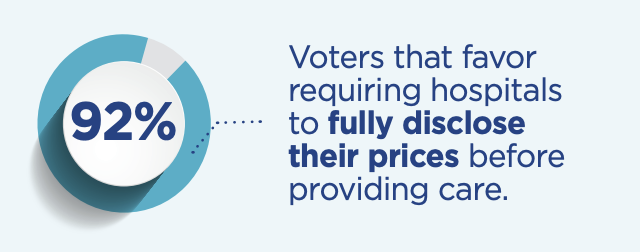
- 87% favor preventing hospitals from charging more than doctors’ offices for the same outpatient services.
- 85% want to prevent hospitals from charging “facility fees” for services provided at outpatient clinics or for telehealth visits.
- 79% support limiting what hospitals can charge for health care services to no more than twice the price that Medicare pays.
The demand for transparency from corporate hospitals and health systems represents a growing focus on hospitals’ role in the nation’s health care affordability crisis.
- Nine in 10 voters (89%) say it is important for Congress to act, including 93% of Democrats and 86% of Republicans.
Voters are worried about Congressional inaction.
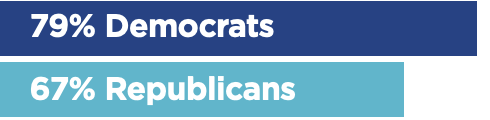
72% worry more that Congress won’t do enough to lower hospital prices, including:
Concern over health care costs continues to grow.
- Eight in 10 voters (80%) say reducing health care prices should be a high priority for Congress and the president, up from 71% in 2024.
- Four in 5 voters (81%) say the government can reduce health care prices without hurting the quality of care.
- The proportion of voters who say reducing health care prices is an “extremely high priority” rose from 46% in 2024 to 62% in 2026.
ABOUT THE POLL
The survey was conducted between September 4 and 8, 2026, by Hart Research and North Star Opinion Research. It included 1,212 registered voters with a margin of error of +/-3.2 percentage points.